 Taipei Sky Watch: The April Lyrids Peak on Thursday—Don't Miss the Fireballs!
Post date:2026-04-23
Updates:2026-04-27
Press bureau:Taipei Astronomical Museum
225
The April Lyrids, which appear every year from mid- to late April, will be active this year from April 14 to 30. The peak is expected in the early hours of Thursday, April 23, and the nights around that date will also offer excellent viewing opportunities. Known for their high speed and bright meteors, the April Lyrids are expected to produce about 10 meteors per hour at maximum. The radiant rises at around 9 p.m., and with the nearly first-quarter moon setting before midnight, viewing conditions will be excellent and free from moonlight interference. A splendid meteor display is in store.
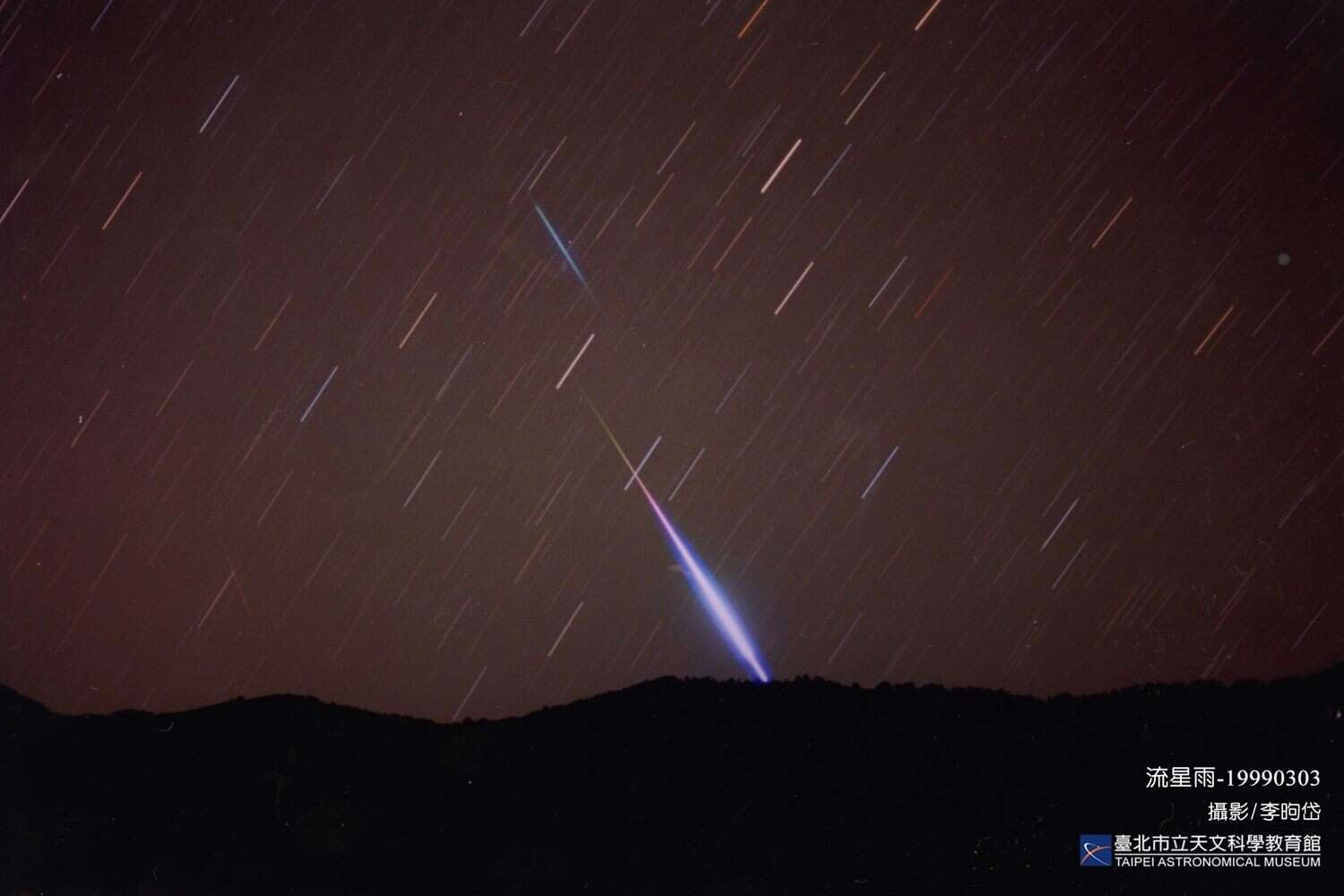
Although the Lyrids produce fewer meteors than major meteor showers, their average brightness is high, and fireballs brighter than Venus often appear, making them especially eye-catching. As a result, they have been recorded since ancient times and are among the earliest meteor showers mentioned in historical texts. A passage in the Zuo Zhuan, "In summer, on the fourth month, on the xinmao day, at night, the fixed stars were invisible; in the middle of the night, stars fell like rain," refers to the Lyrid meteor shower that appeared in 687 BCE. In 1867, its parent body was confirmed to be Comet Thatcher (C/1861 G1 Thatcher), making it also one of the earliest meteor showers whose parent body was identified.
No telescope is needed to watch a meteor shower. Simply choose a place with little light pollution and a wide-open view of the sky, then look up. With a high-sensitivity camera and suitable framing, you may also capture the meteors' fleeting beauty. Generally speaking, meteors appearing near the radiant are more numerous and brighter, while those farther from the radiant tend to leave longer trails.
For more astronomical information, please visit the Taipei Astronomical Museum website and see "Astronomy Knowledge / Astronomical Forecasts."
Although the Lyrids produce fewer meteors than major meteor showers, their average brightness is high, and fireballs brighter than Venus often appear, making them especially eye-catching. As a result, they have been recorded since ancient times and are among the earliest meteor showers mentioned in historical texts. A passage in the Zuo Zhuan, "In summer, on the fourth month, on the xinmao day, at night, the fixed stars were invisible; in the middle of the night, stars fell like rain," refers to the Lyrid meteor shower that appeared in 687 BCE. In 1867, its parent body was confirmed to be Comet Thatcher (C/1861 G1 Thatcher), making it also one of the earliest meteor showers whose parent body was identified.
No telescope is needed to watch a meteor shower. Simply choose a place with little light pollution and a wide-open view of the sky, then look up. With a high-sensitivity camera and suitable framing, you may also capture the meteors' fleeting beauty. Generally speaking, meteors appearing near the radiant are more numerous and brighter, while those farther from the radiant tend to leave longer trails.
For more astronomical information, please visit the Taipei Astronomical Museum website and see "Astronomy Knowledge / Astronomical Forecasts."


