 Happy DIY Dyeing (TAIPEI Quarterly 2025 Spring Vol.39)
Post date:2025-03-10
577
TAIPEI #39 (2025 Spring)
Happy DIY Dyeing
Dipping into the World of Textile Art in Dadaocheng
TEXT Ami Barnes
PHOTOS Ray Chang
Despite – or perhaps because of – Taipei's reputation as a hub of hustle culture, many residents manage to carve out time for creative pursuits. Small studios and craft spaces catering to this need can be found in almost every neighborhood. The historic trading district of Dadaocheng is home to more than its fair share, among them Fleacise – a textile art workshop with a distinct local flair.
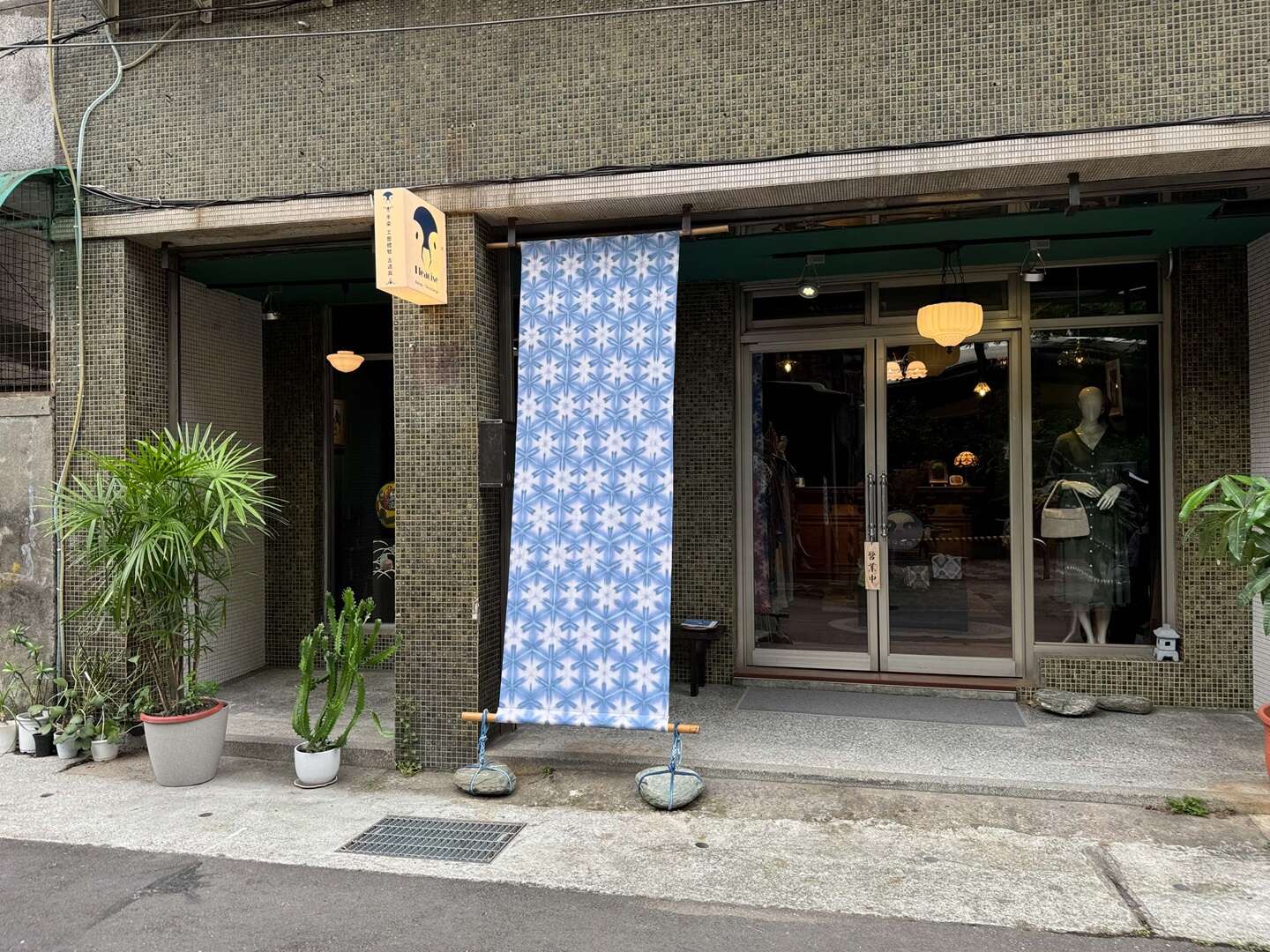
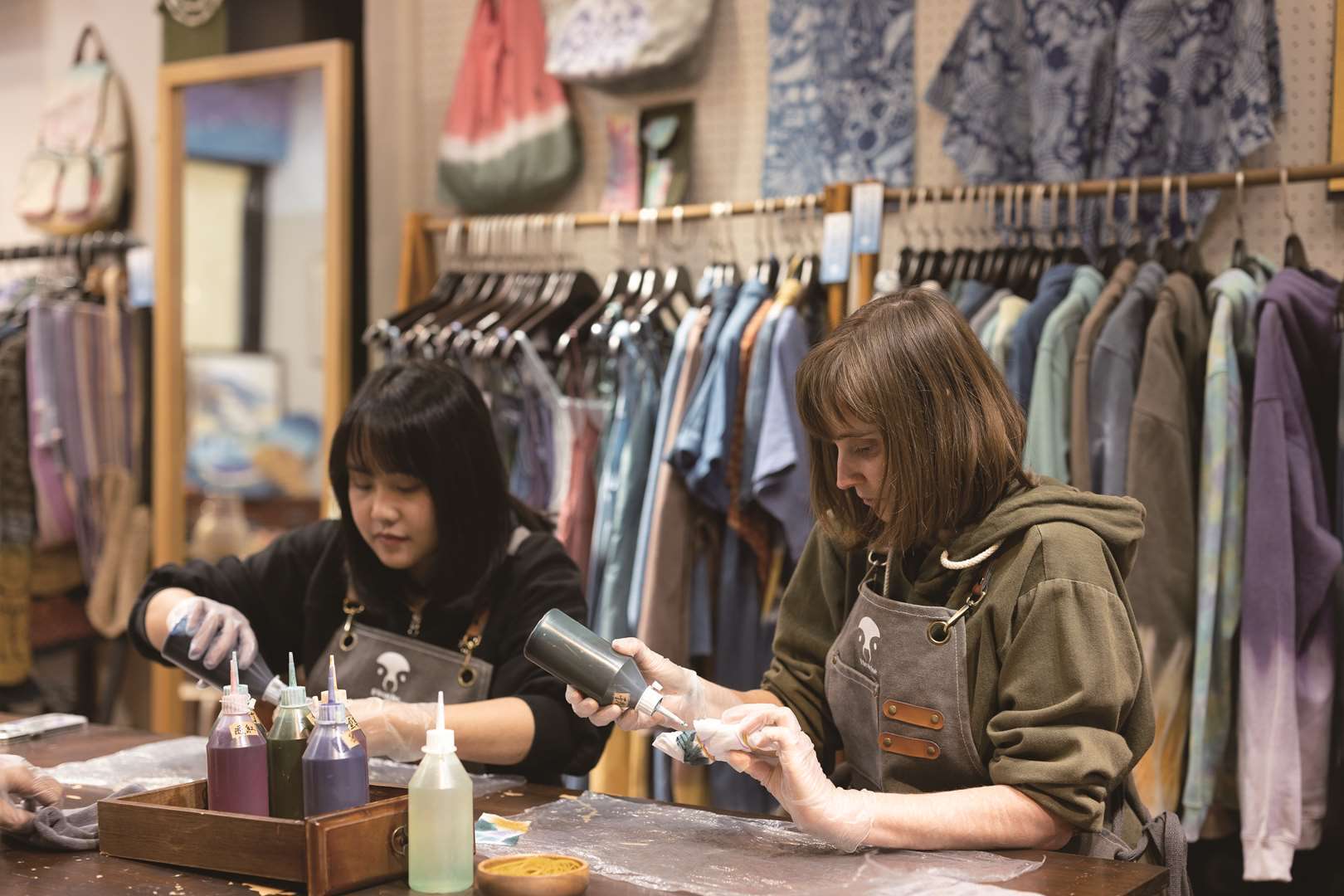
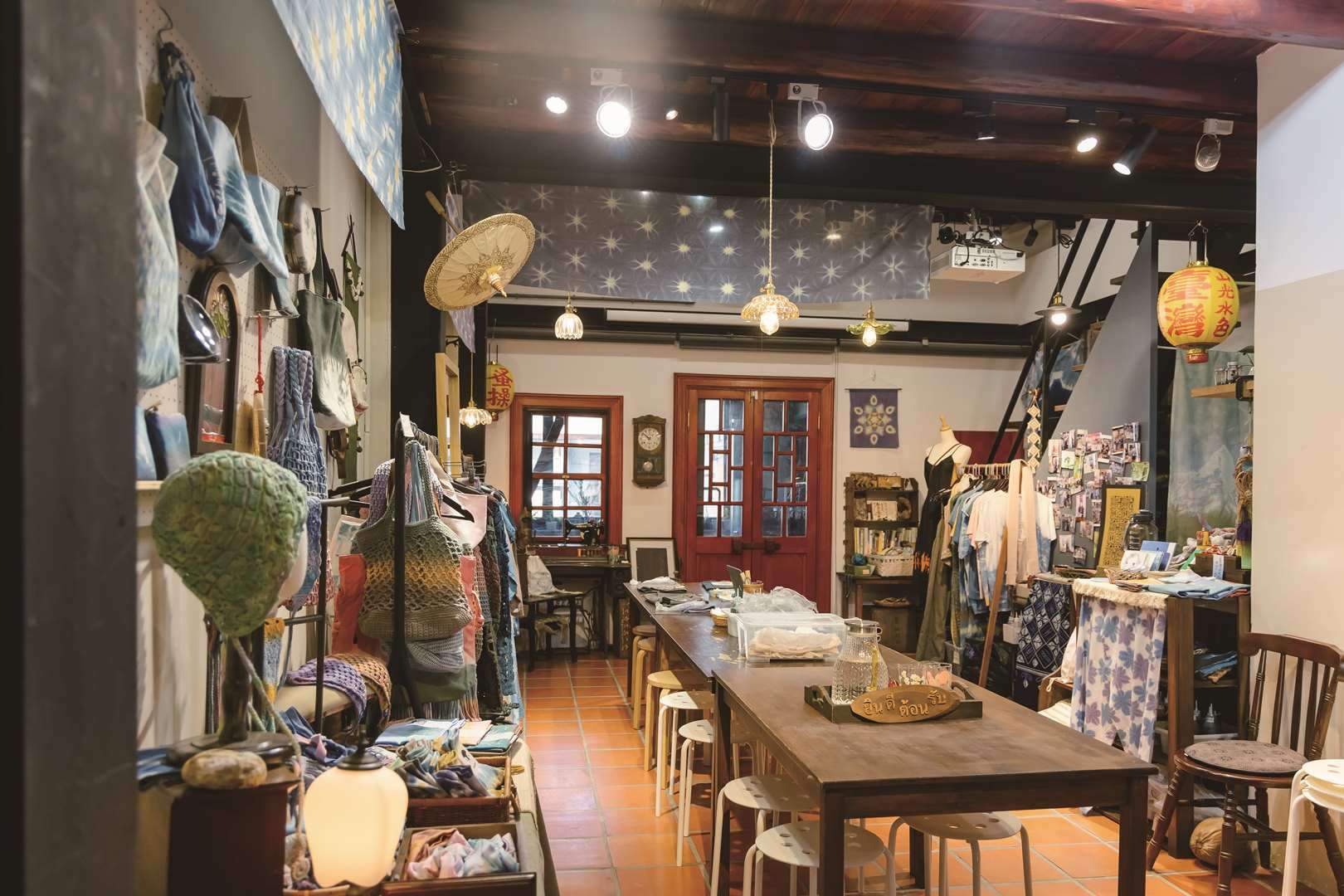
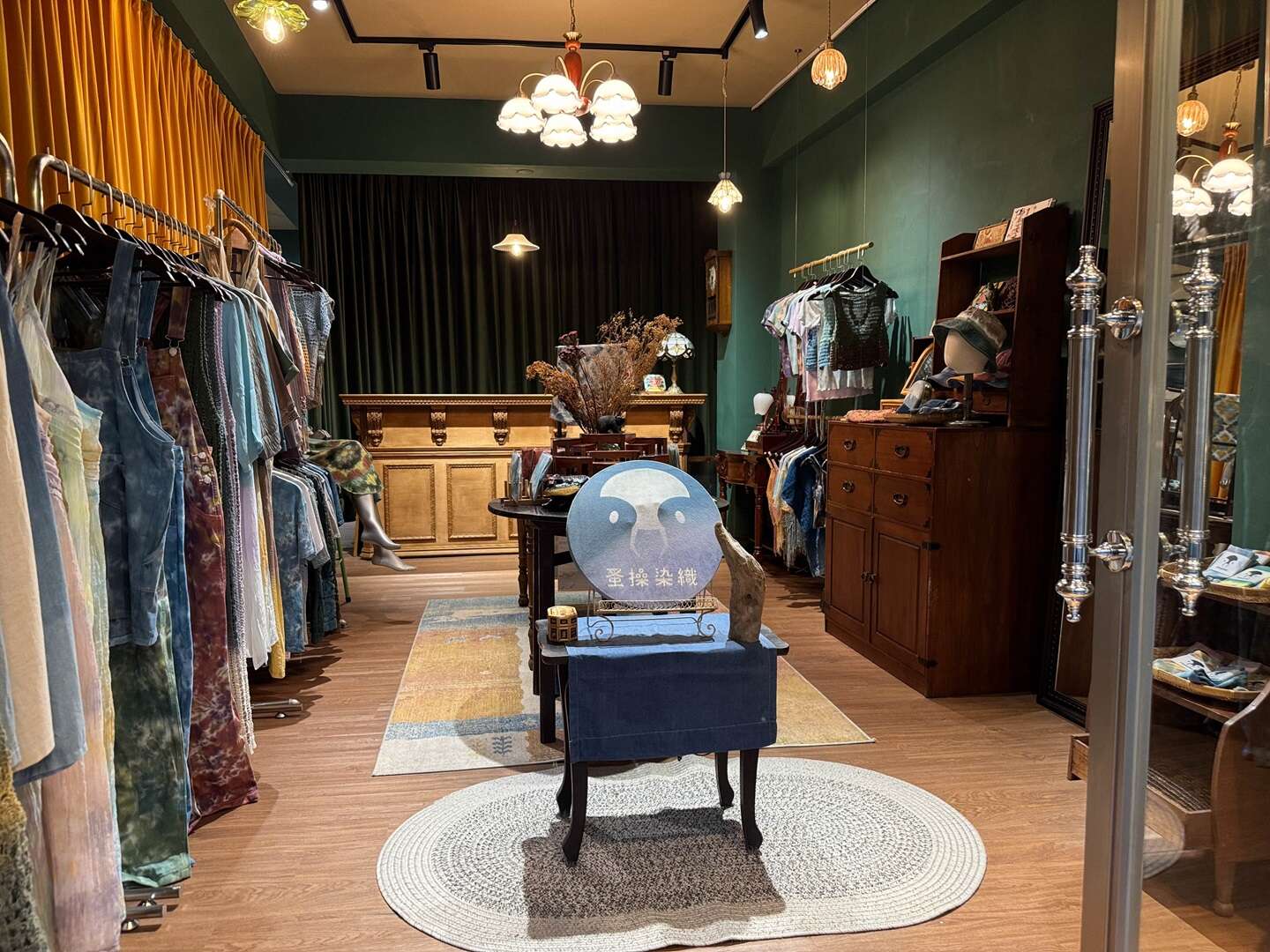
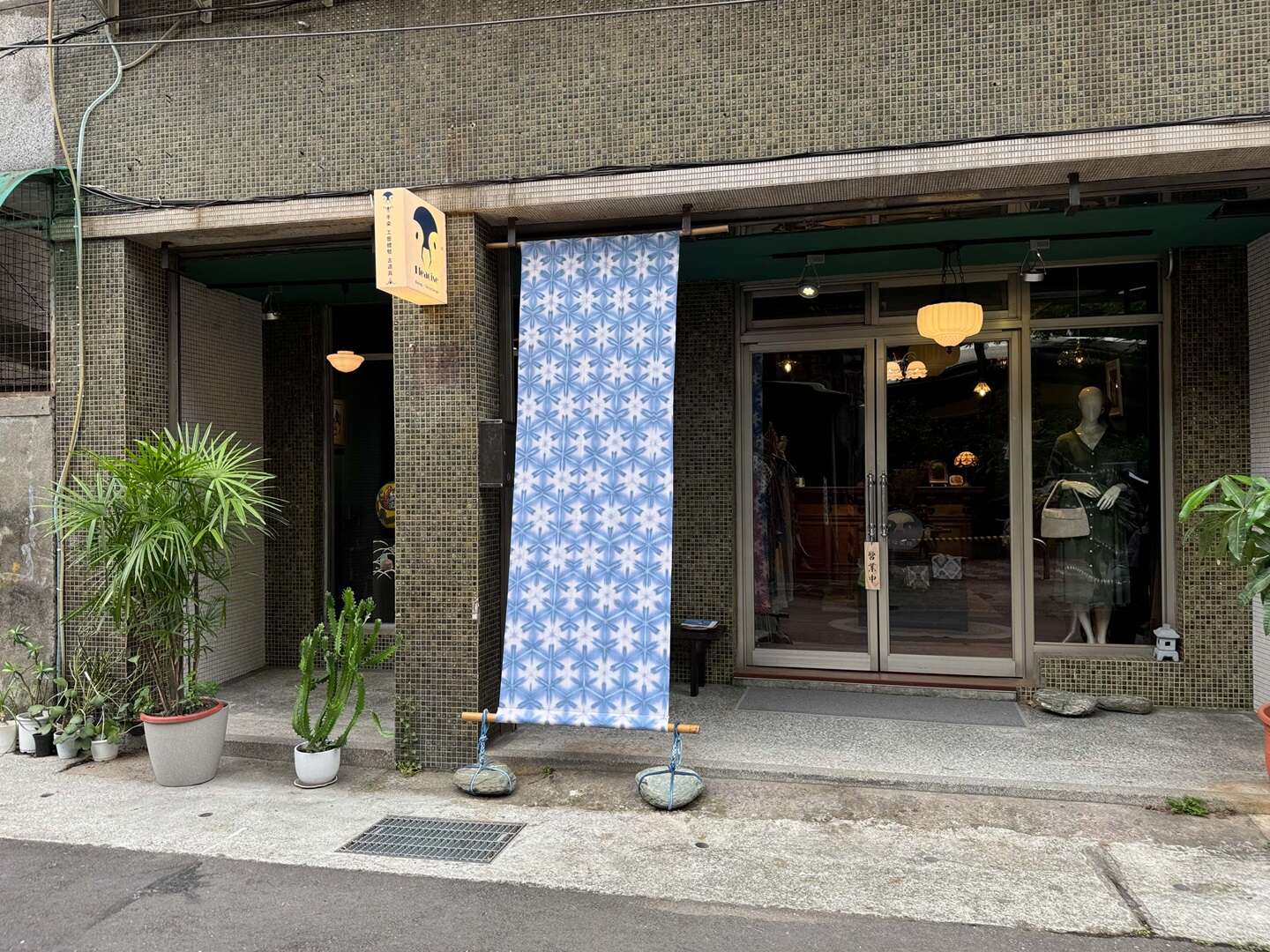
Husband and wife duo Zoma and Guang run their textile art enterprise out of a loft space on the trendier northern end of Dihua Street. The pair, who met during their university years, shared a creative streak and an affection for browsing flea markets – specifically those moments of surprise elicited by finding something utterly wonderful hidden among a pile of junk.
When Guang – the one with a formal background in arts and crafts – introduced Zoma to textile dyeing, he discovered dyeing brought that same sense of anticipation and delight. From this seed, Fleacise was born ("flea-" encapsulating the thrill of flea markets, "-cise" for the idea of exercise and devoting your energy to a creative practice). Initially selling their work at craft markets and on platforms like Pinkoi (an online platform similar to Etsy), they later started incorporating simple DIY workshops, and finding their own studio space came as the next natural step.
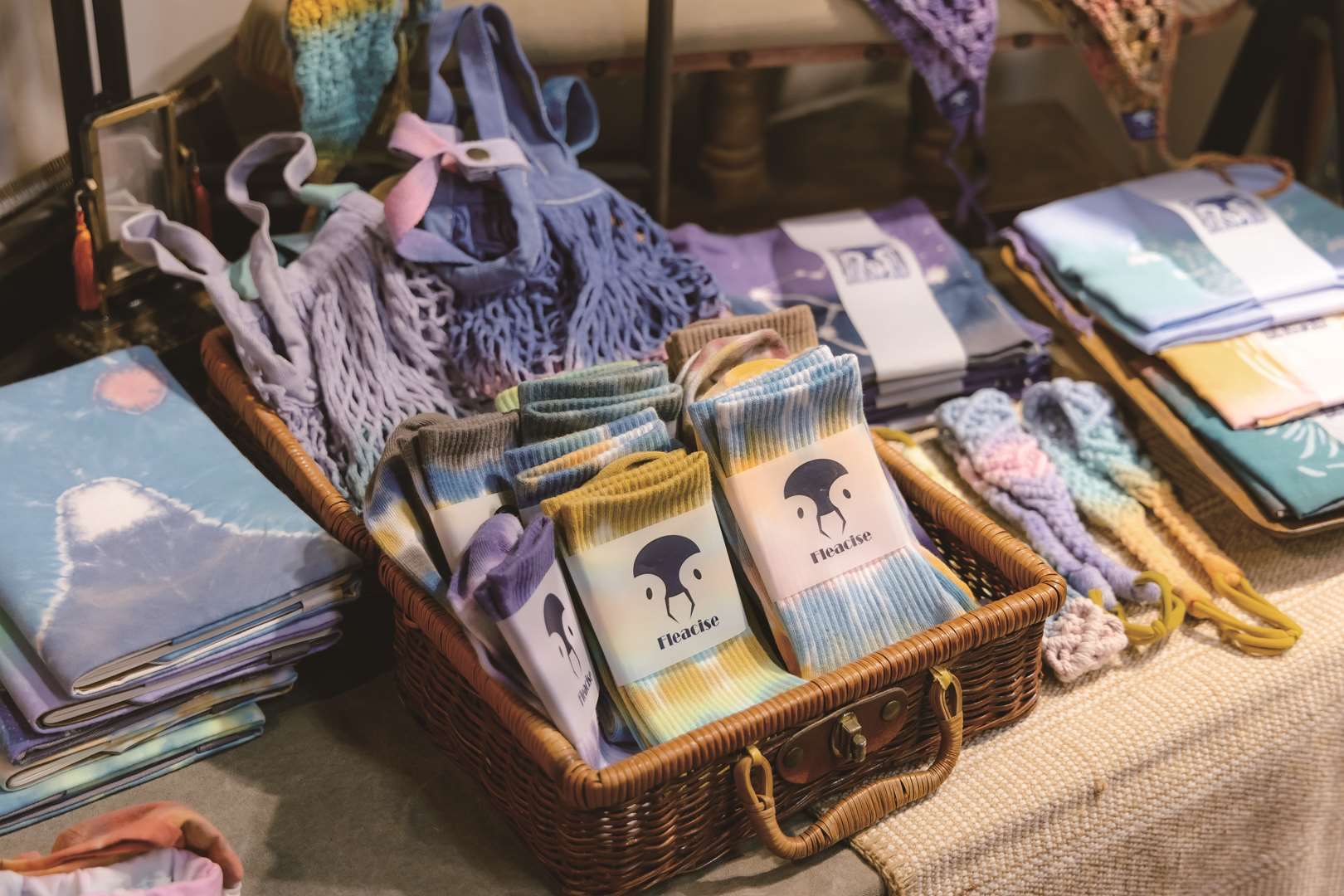
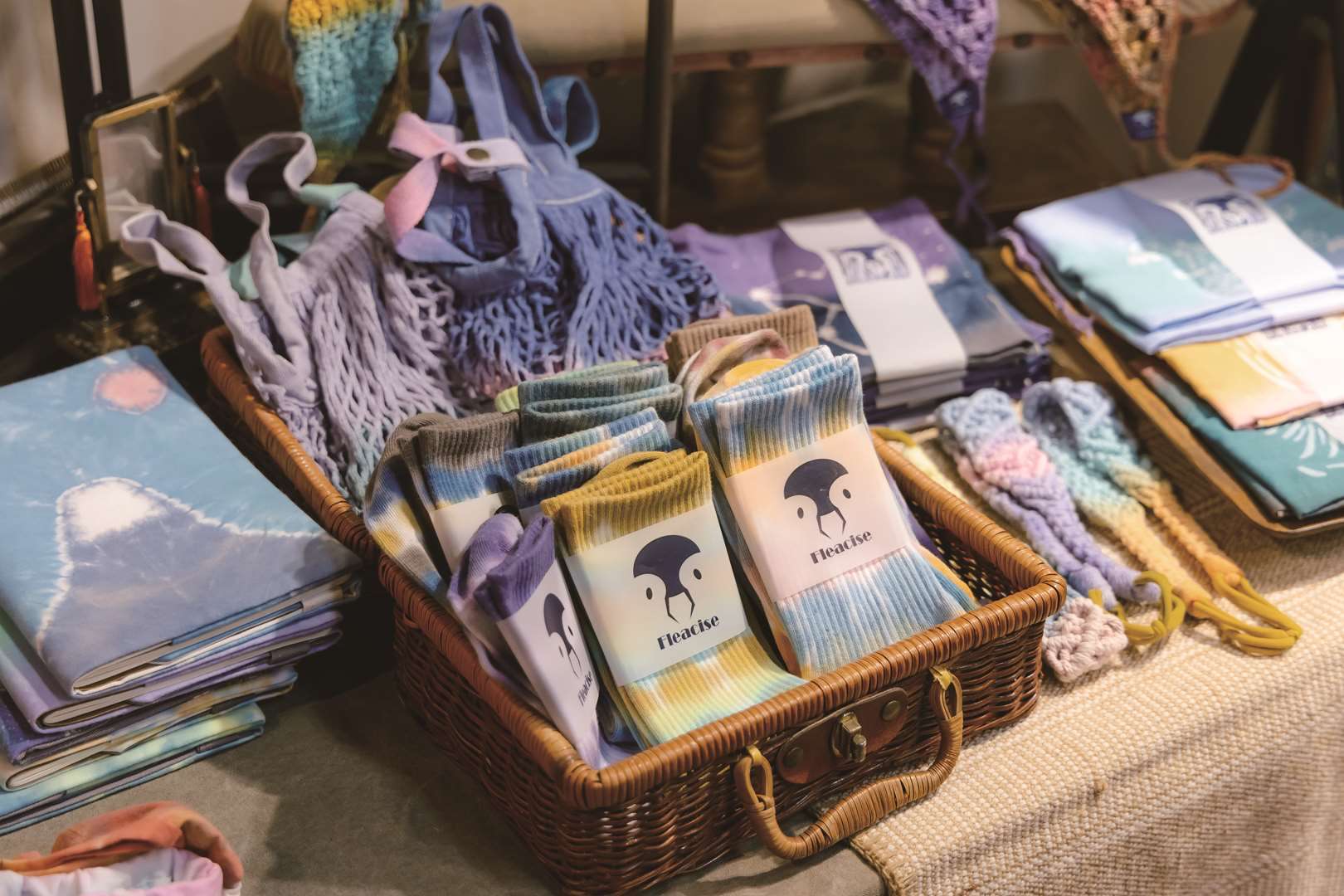
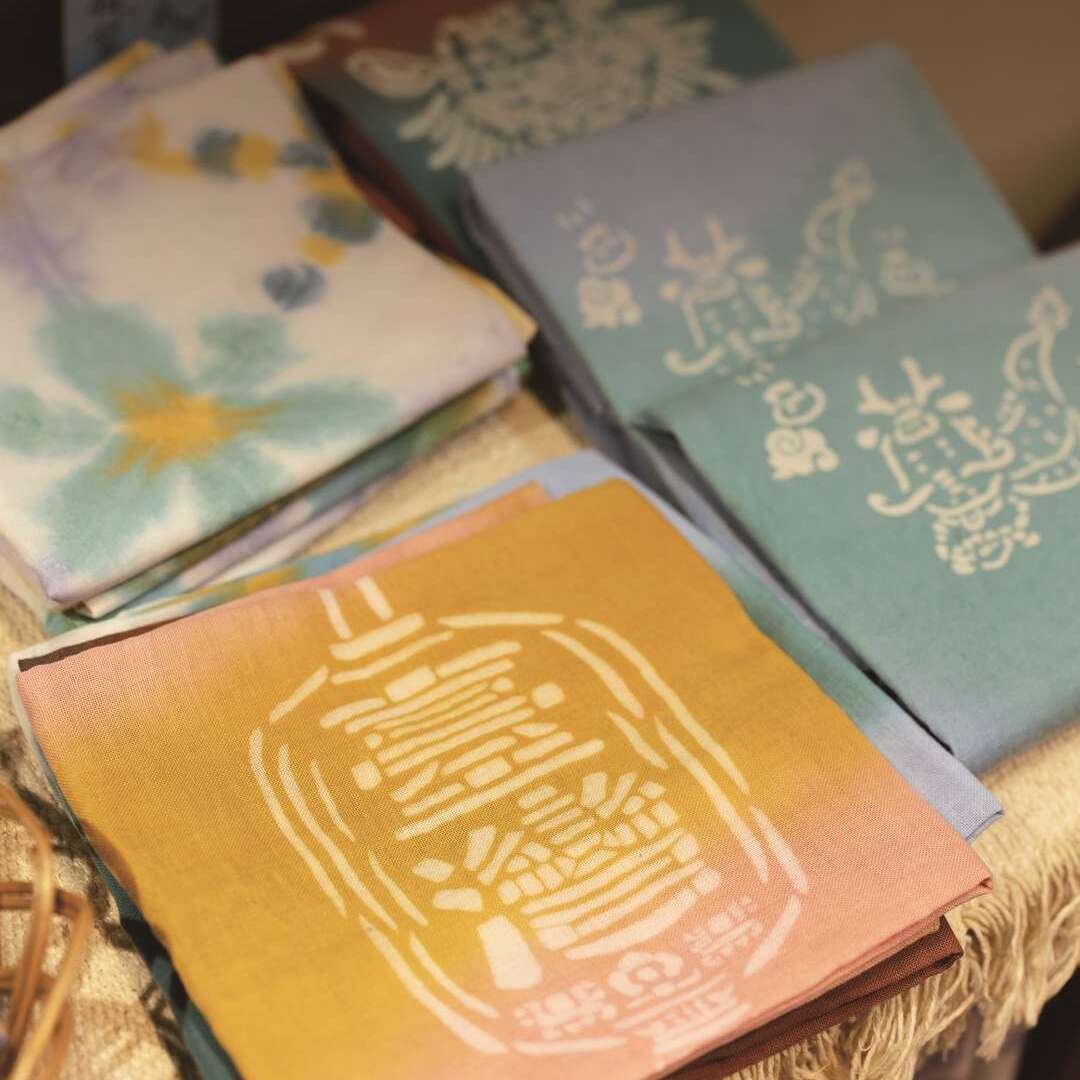
▲Hand-dyed socks and other items
Over the past decade, they've established several classes, including plant dyeing, indigo dyeing, and stencil printing, as well as tutorials on more niche interests like tsutsugaki (a Japanese resist-dyeing technique). Classes can be conducted in Mandarin, English, or Japanese, and are bookable via Fleacise's website (or Pinkoi in English). Small groups of 3-5 are welcome. For larger groups, it is best to contact the studio directly via the official website email address to discuss arrangements. The casual, creative atmosphere makes the experience great for tourists seeking a break from pounding the pavements, or families wanting to organize a crafty kids' party.
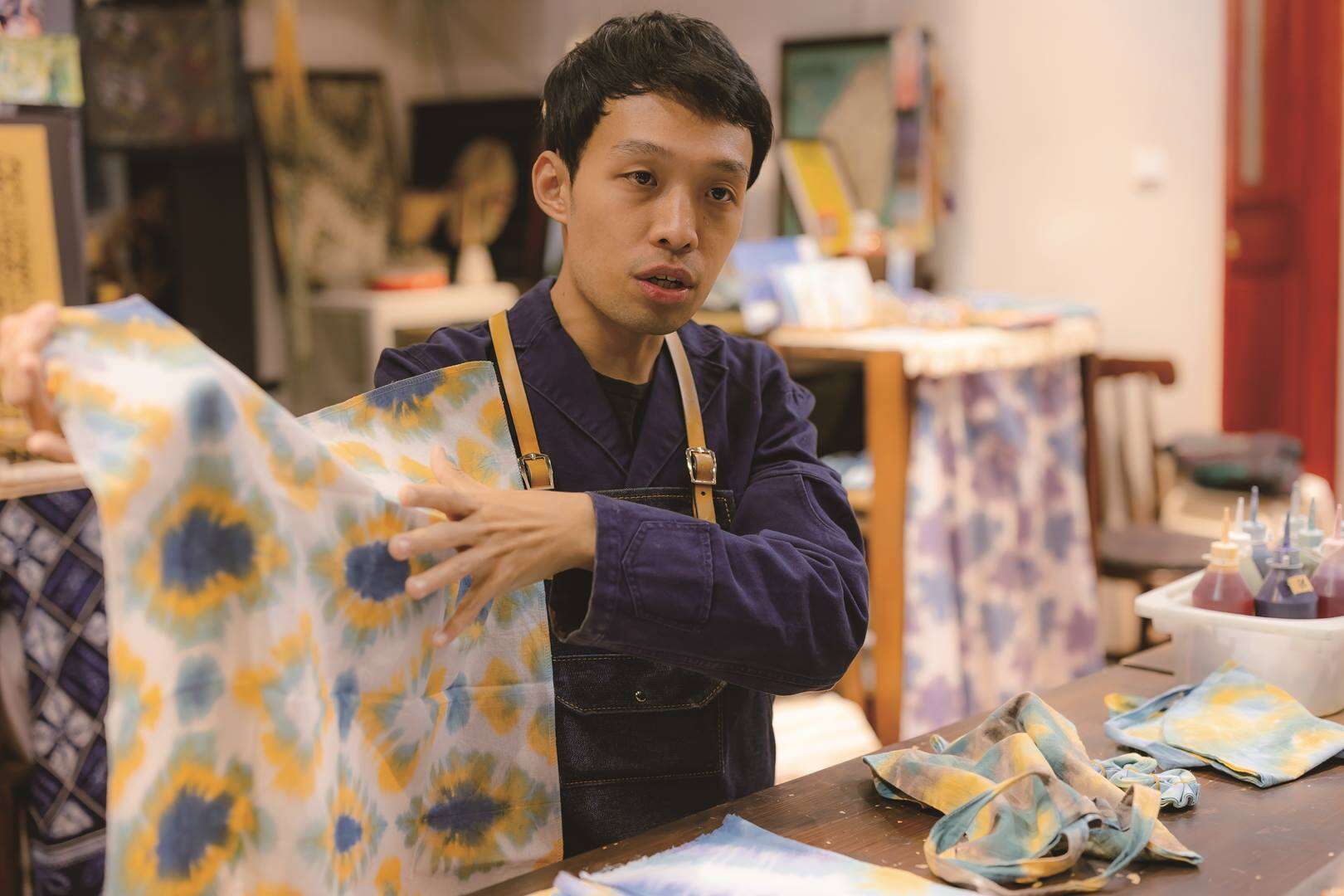
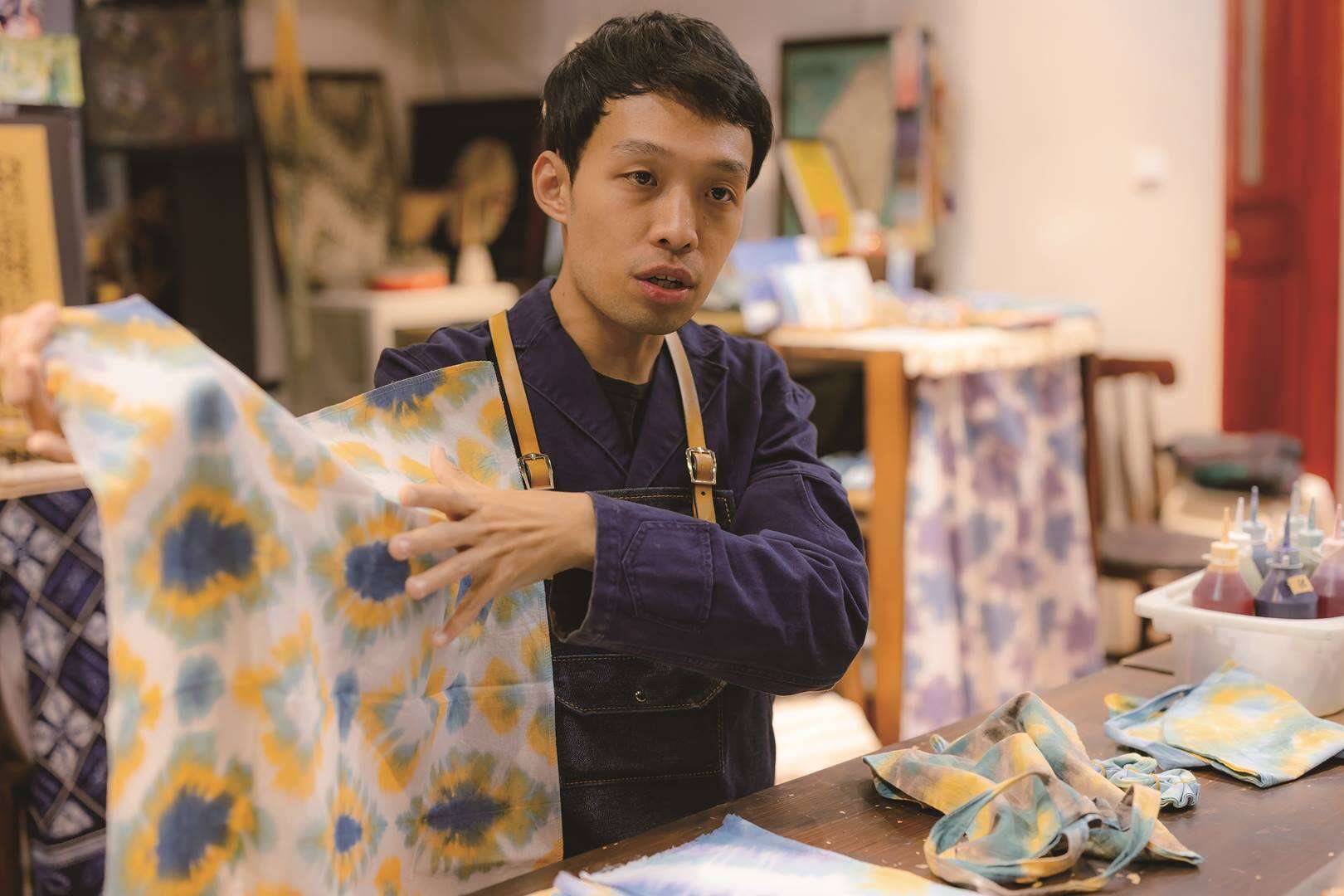
▲Zoma explaining texile dyeing
On a January afternoon, with Dihua Street getting into the swing of its boisterous annual Lunar New Year market, a friend and I slipped away from the hawkers and gawking crowds to step into Fleacise's quiet workspace.
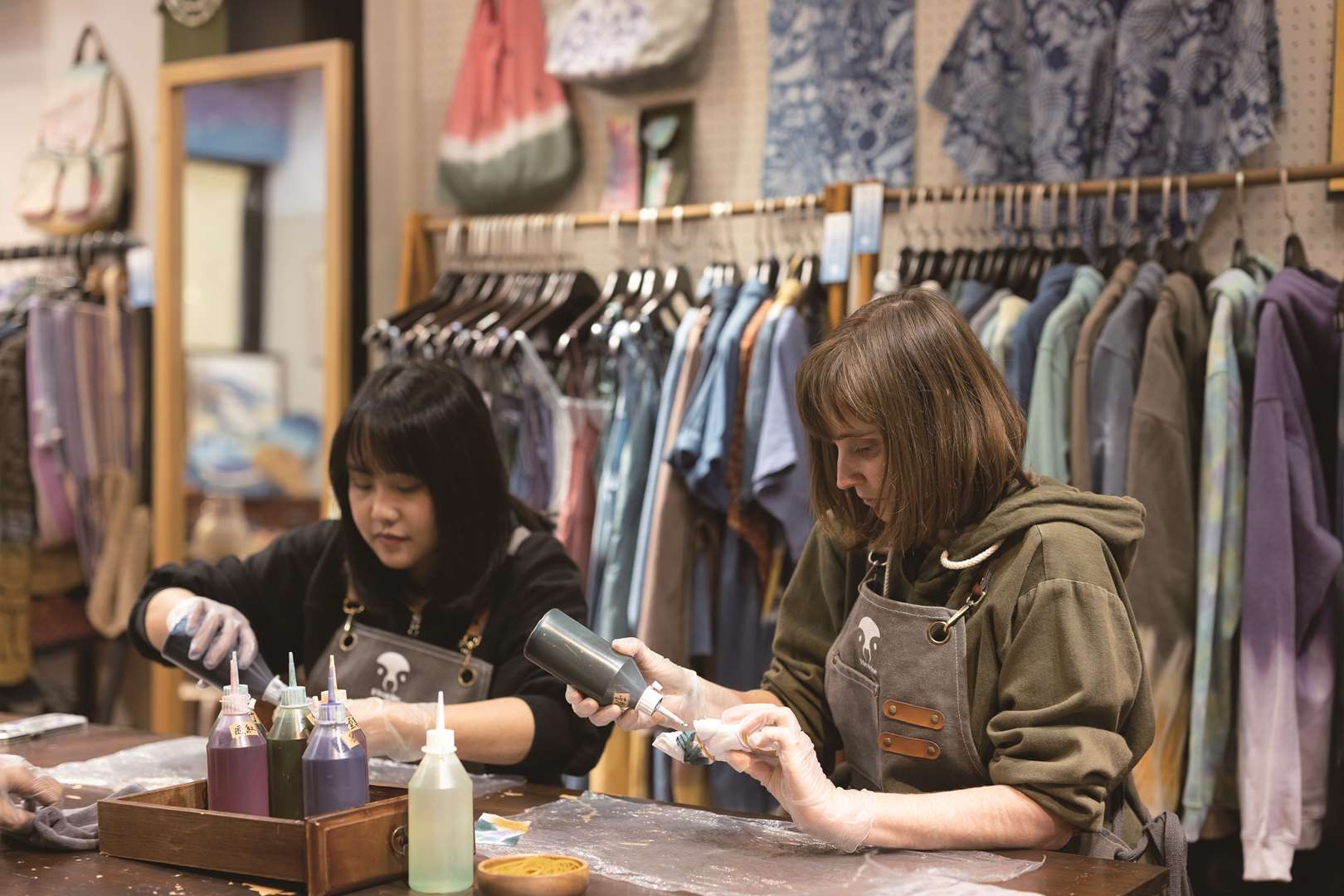
We were greeted by Zoma, who promptly kitted us out with aprons (the work isn't messy, but I wouldn't advise wearing a brand-new white T-shirt). We had opted for a two-hour Majolica-tile-inspired dyeing session and picked out two simple projects – a kerchief and a tote bag. Zoma began by deftly demonstrating how to concertina the fabric to create a repeating pattern. I'm no novice to the world of tie-dyeing, but my previous efforts could best be described as being quite try-it-and-see in nature, and even under Zoma's guidance it took me a couple of attempts to achieve a satisfying uniformity in my folds.
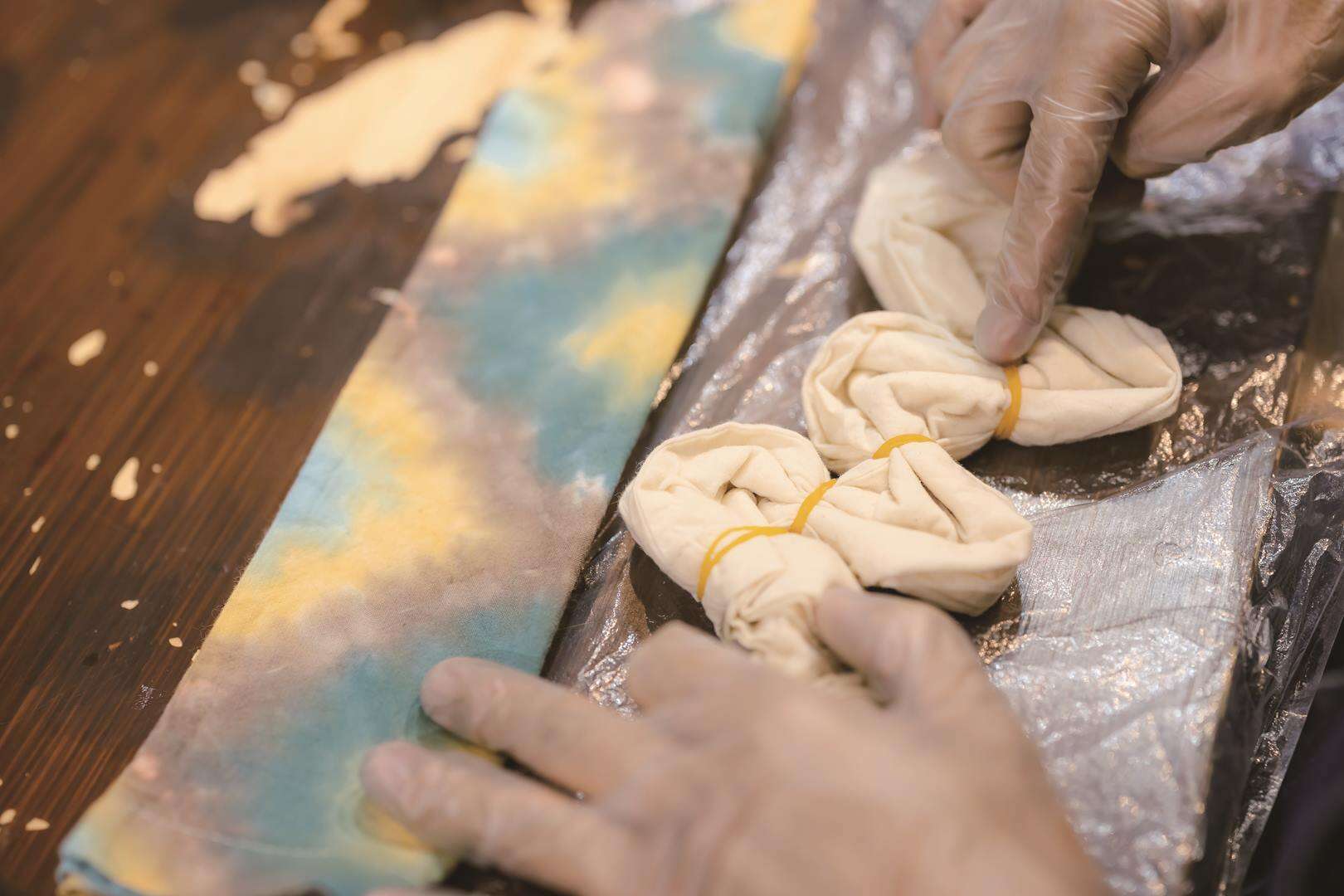
The next step involved drawing lines across our pieces using disappearing markers. The lines helped guide our fingers during the final folding stage as we gathered the fabric together, securing it with the quick twist of a rubber band. This step was much harder for my friend, who was working on the tote bag, but as Zoma reassured us, there's no wrong way to tie-dye – whatever the result, it is uniquely, serendipitously yours.
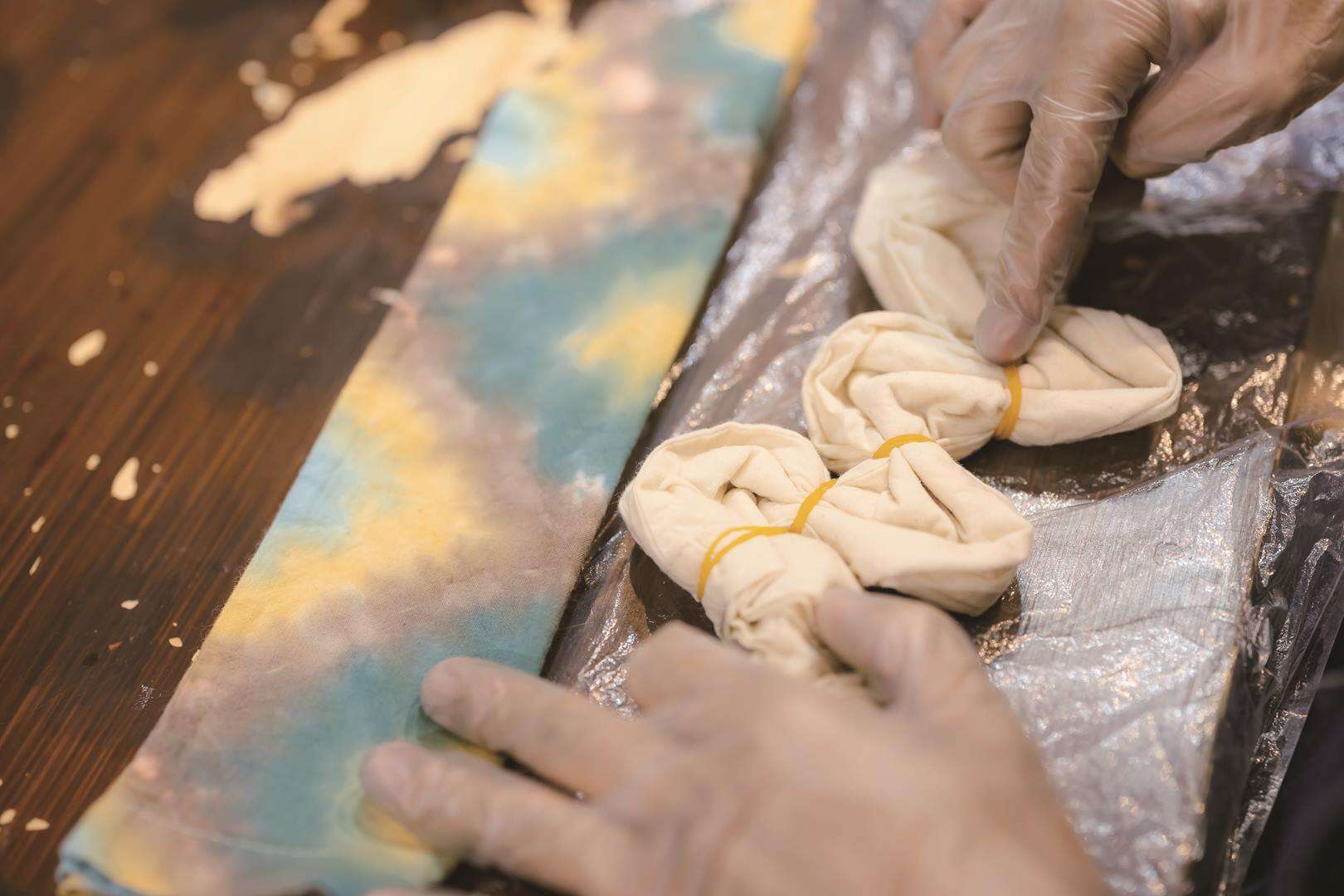
▲Folding and tying the fabric with rubber bands
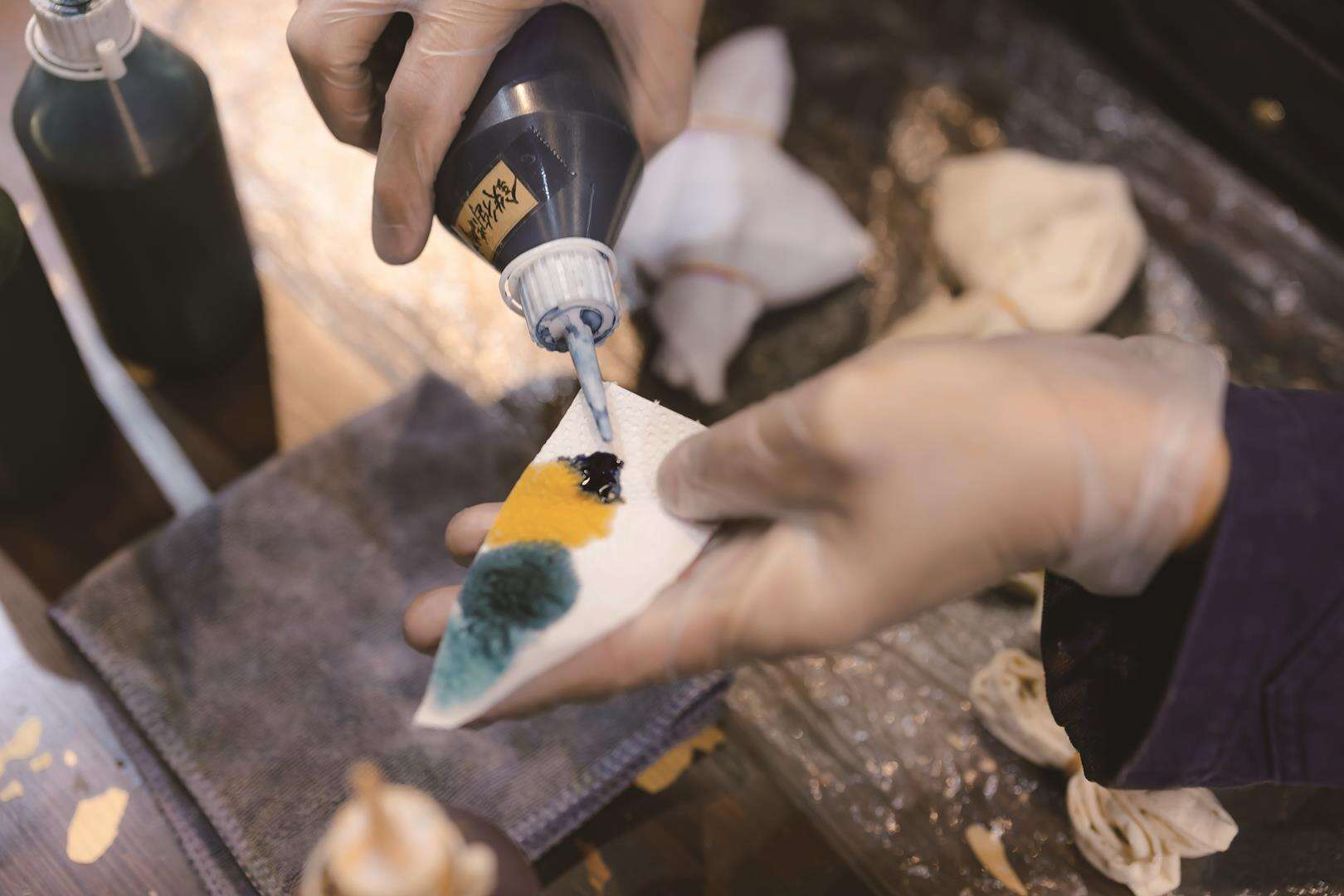
With the tying part of the class out of the way, it was time to move on to the dyeing portion. We were let loose with a palette of dyes that had been selected for their similarity to the colors used in Majolica tilework, and also because – no matter how bad you are at pairing colors – any combination would work together. Zoma encouraged us to test the dyes on swatches of kitchen towels so we could see how they'd bleed into each other and showed us examples of previous projects to illustrate how various choices might shake out. I settled on a mix of orange day lily, chitose midori (a dark pine green), and some kind of light blue – the names given to each dye are drawn from Japanese dyeing traditions. Then, it was time to soak our creations in a fixative and wait.
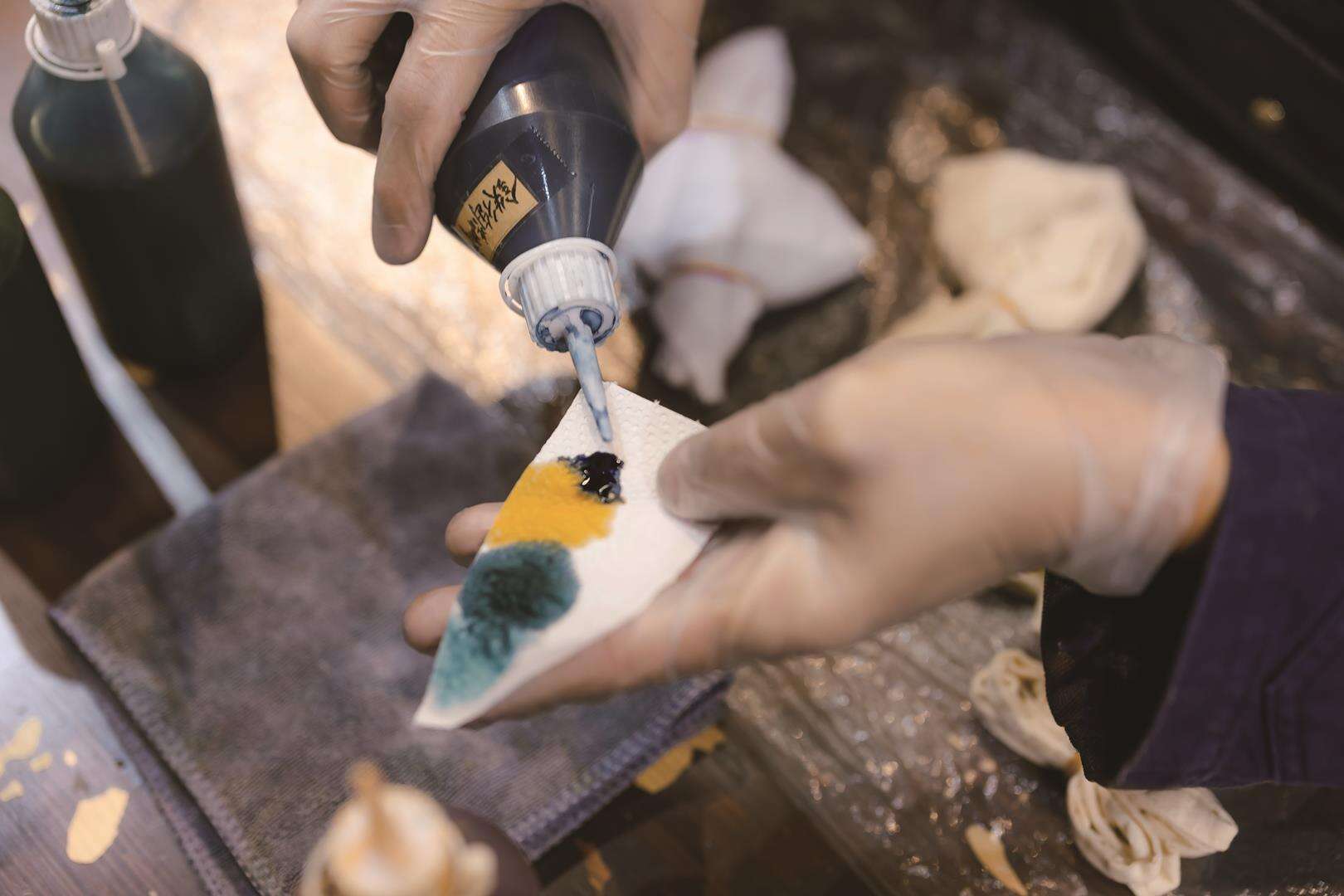
▲Testing different color combinations
Fleacise's hook, what sets it apart from other similar experiences, is that each session is crafted to incorporate some elements of Taiwanese arts and aesthetics. The purpose of this is twofold. Not only does it give participants a deeper connection to Taiwan and local handiwork, but it also fills twenty minutes that would otherwise be spent twiddling your thumbs as you wait for the dye to set. In our case, we were treated to a brief introduction to Majolica tiles – how they came to represent a very specific era in Taiwan's architectural history, which motifs are unique to Taiwan, and where they can be seen. Other classes dip into the local indigo-dyeing industry, or tea and other tinctorial plants. For the culturally curious, Fleacise offers concise and well-conceived basic primers.
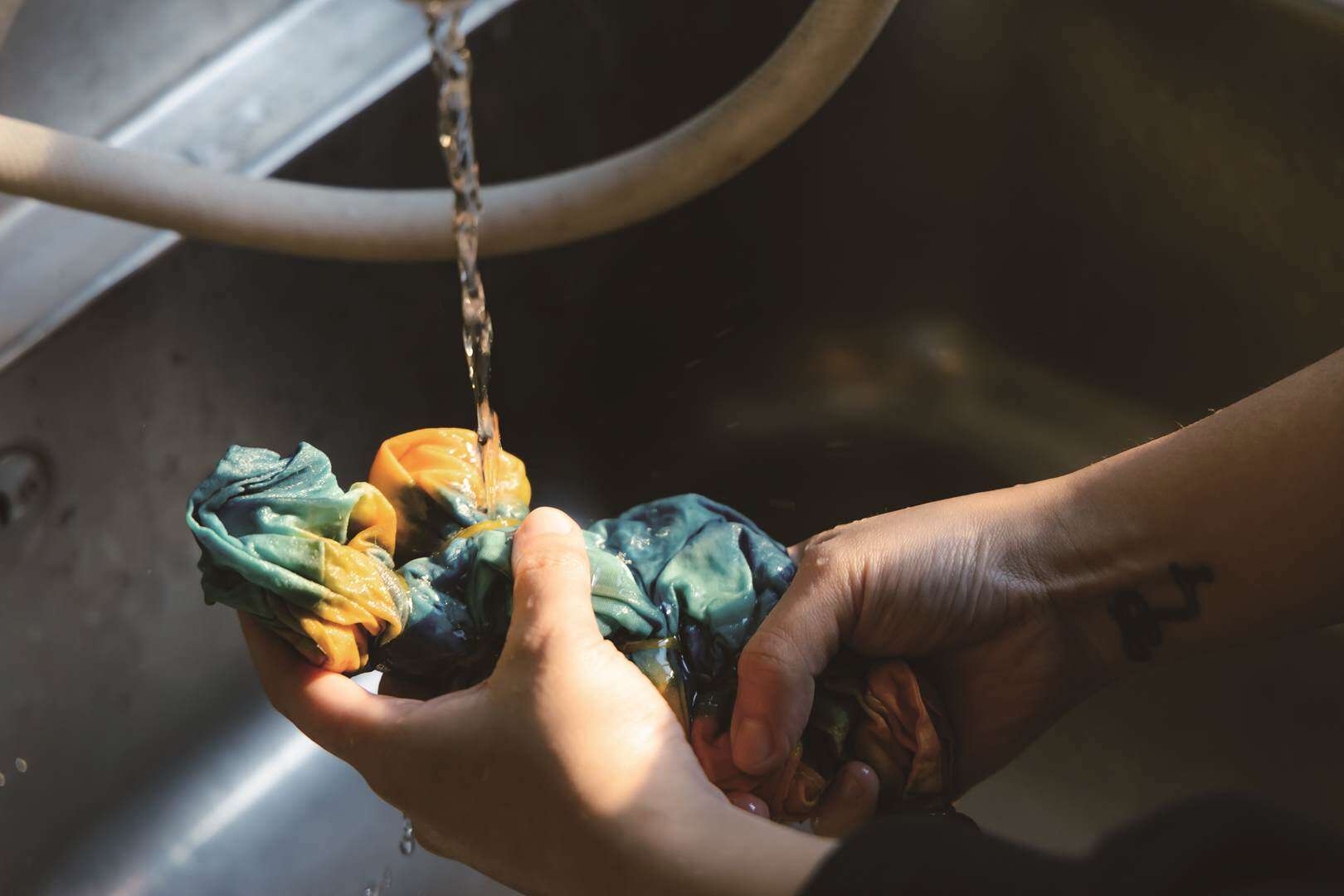
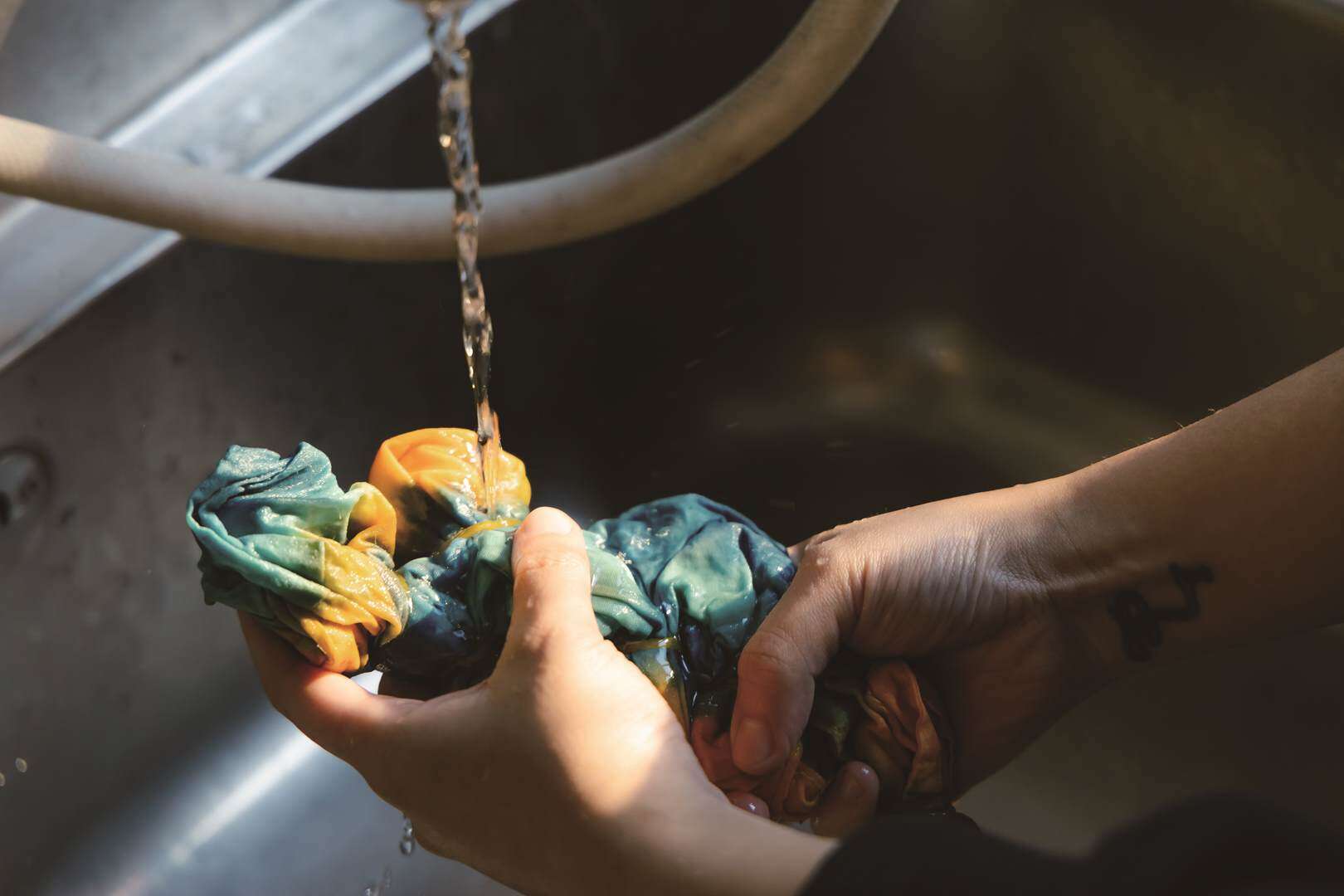
▲Rinsing the fabric
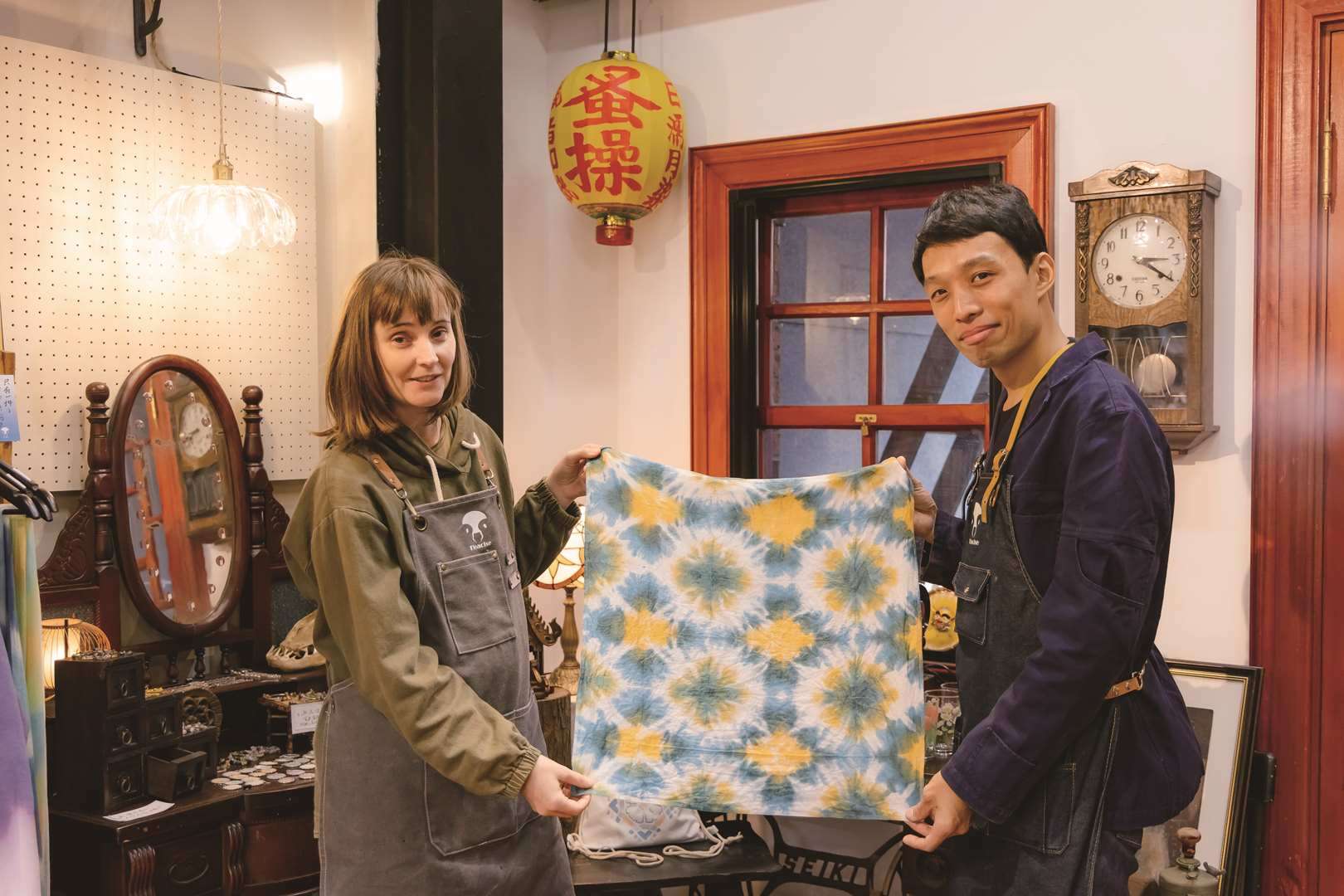
When it was finally time to rinse our designs, mine unfolded to show a Rorschachian array of tessellating starbursts, while my friend's efforts had resulted in an abstract garden-esque design. The unveiling was genuinely exciting, and I can easily understand how Zoma and Guang came to be addicted to this thrilling moment of revelation.
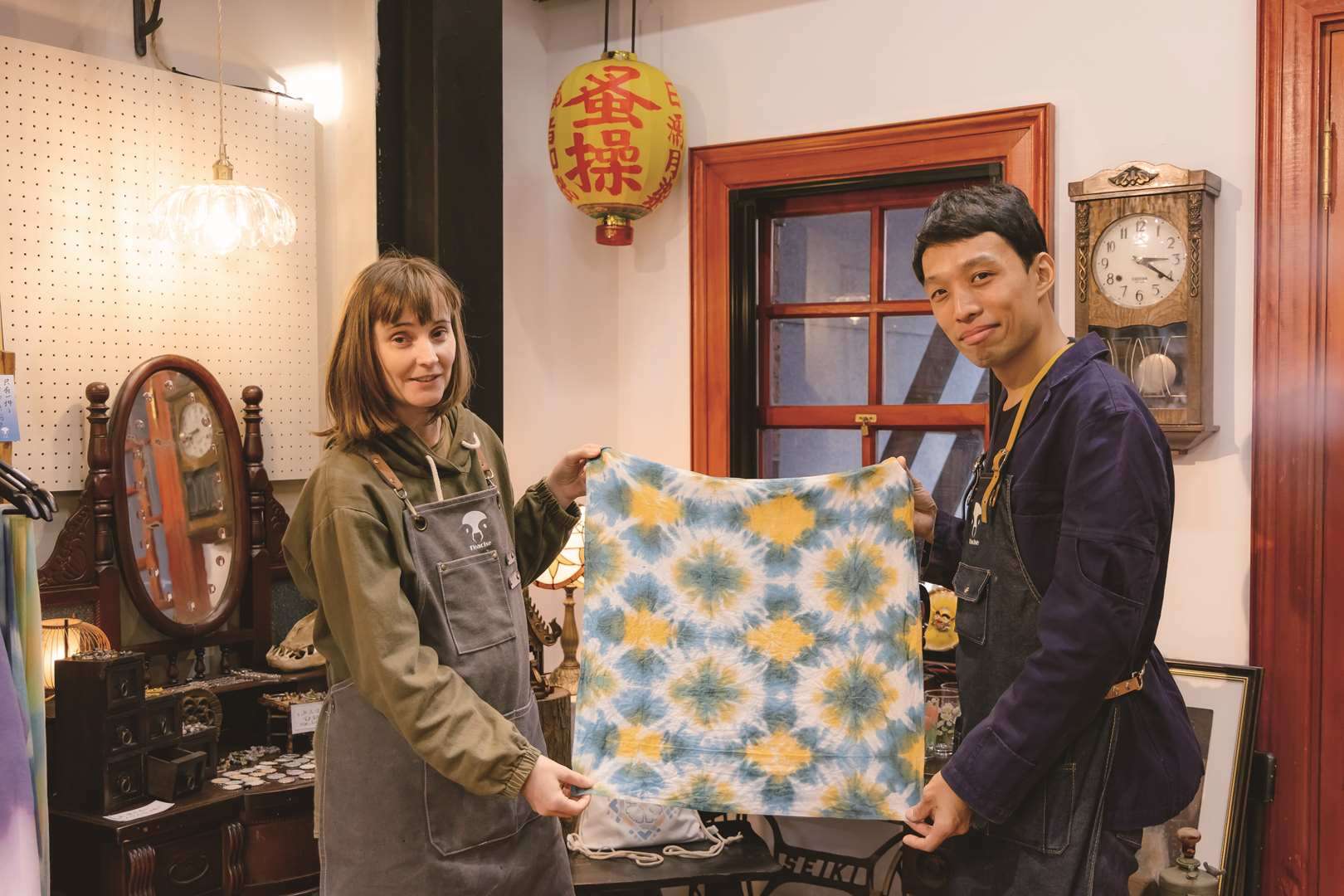
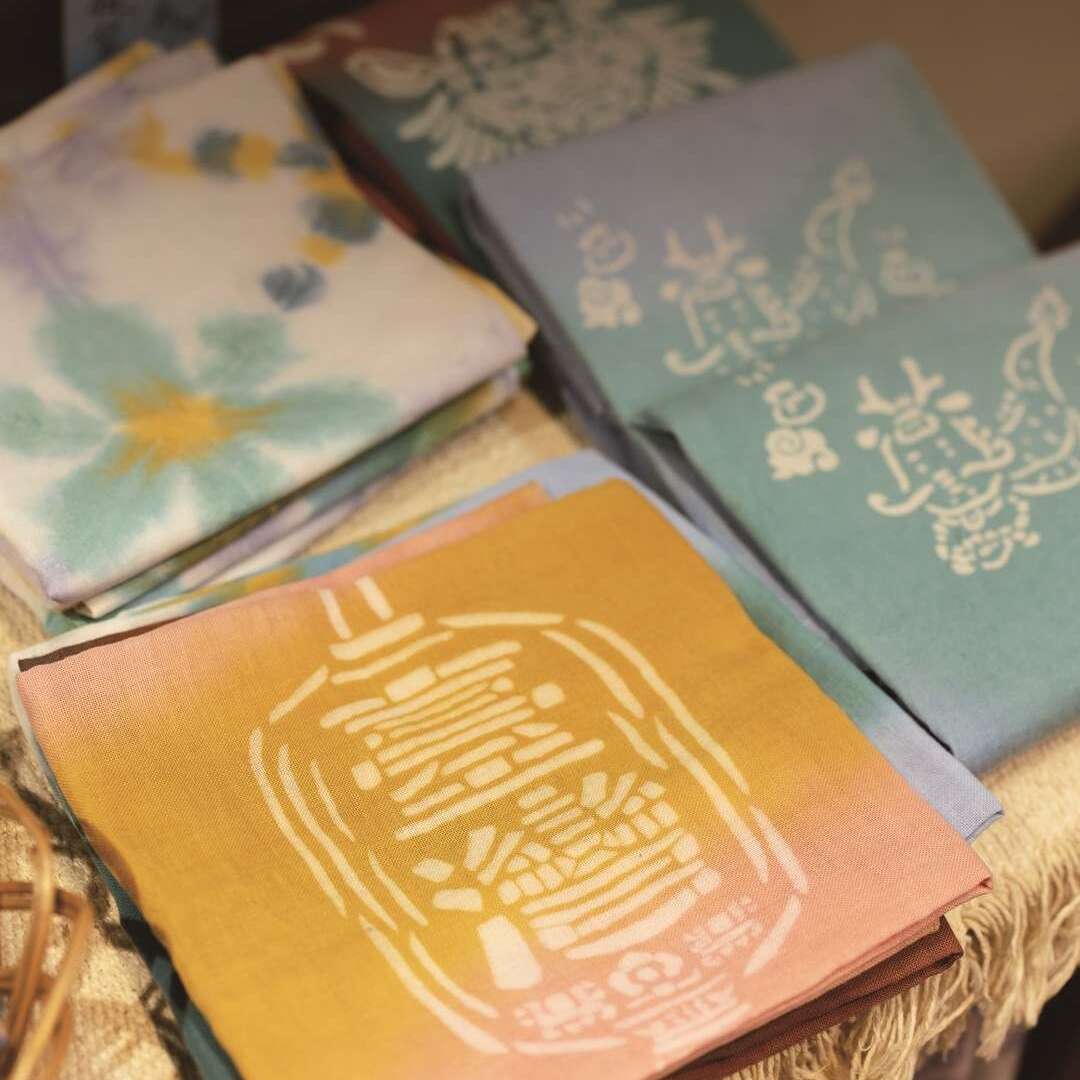
▲Kerchief with mojolica tile pattern
Fleacise 蚤操染織
🚩20, Ln. 167, Nanjing W. Rd., Datong Dist.
🔗www.fleacise.com
🕝By reservation only
Happy DIY Dyeing
Dipping into the World of Textile Art in Dadaocheng
TEXT Ami Barnes
PHOTOS Ray Chang
Despite – or perhaps because of – Taipei's reputation as a hub of hustle culture, many residents manage to carve out time for creative pursuits. Small studios and craft spaces catering to this need can be found in almost every neighborhood. The historic trading district of Dadaocheng is home to more than its fair share, among them Fleacise – a textile art workshop with a distinct local flair.
Husband and wife duo Zoma and Guang run their textile art enterprise out of a loft space on the trendier northern end of Dihua Street. The pair, who met during their university years, shared a creative streak and an affection for browsing flea markets – specifically those moments of surprise elicited by finding something utterly wonderful hidden among a pile of junk.
When Guang – the one with a formal background in arts and crafts – introduced Zoma to textile dyeing, he discovered dyeing brought that same sense of anticipation and delight. From this seed, Fleacise was born ("flea-" encapsulating the thrill of flea markets, "-cise" for the idea of exercise and devoting your energy to a creative practice). Initially selling their work at craft markets and on platforms like Pinkoi (an online platform similar to Etsy), they later started incorporating simple DIY workshops, and finding their own studio space came as the next natural step.
▲Hand-dyed socks and other items
Over the past decade, they've established several classes, including plant dyeing, indigo dyeing, and stencil printing, as well as tutorials on more niche interests like tsutsugaki (a Japanese resist-dyeing technique). Classes can be conducted in Mandarin, English, or Japanese, and are bookable via Fleacise's website (or Pinkoi in English). Small groups of 3-5 are welcome. For larger groups, it is best to contact the studio directly via the official website email address to discuss arrangements. The casual, creative atmosphere makes the experience great for tourists seeking a break from pounding the pavements, or families wanting to organize a crafty kids' party.
▲Zoma explaining texile dyeing
On a January afternoon, with Dihua Street getting into the swing of its boisterous annual Lunar New Year market, a friend and I slipped away from the hawkers and gawking crowds to step into Fleacise's quiet workspace.
We were greeted by Zoma, who promptly kitted us out with aprons (the work isn't messy, but I wouldn't advise wearing a brand-new white T-shirt). We had opted for a two-hour Majolica-tile-inspired dyeing session and picked out two simple projects – a kerchief and a tote bag. Zoma began by deftly demonstrating how to concertina the fabric to create a repeating pattern. I'm no novice to the world of tie-dyeing, but my previous efforts could best be described as being quite try-it-and-see in nature, and even under Zoma's guidance it took me a couple of attempts to achieve a satisfying uniformity in my folds.
The next step involved drawing lines across our pieces using disappearing markers. The lines helped guide our fingers during the final folding stage as we gathered the fabric together, securing it with the quick twist of a rubber band. This step was much harder for my friend, who was working on the tote bag, but as Zoma reassured us, there's no wrong way to tie-dye – whatever the result, it is uniquely, serendipitously yours.
▲Folding and tying the fabric with rubber bands
With the tying part of the class out of the way, it was time to move on to the dyeing portion. We were let loose with a palette of dyes that had been selected for their similarity to the colors used in Majolica tilework, and also because – no matter how bad you are at pairing colors – any combination would work together. Zoma encouraged us to test the dyes on swatches of kitchen towels so we could see how they'd bleed into each other and showed us examples of previous projects to illustrate how various choices might shake out. I settled on a mix of orange day lily, chitose midori (a dark pine green), and some kind of light blue – the names given to each dye are drawn from Japanese dyeing traditions. Then, it was time to soak our creations in a fixative and wait.
▲Testing different color combinations
Fleacise's hook, what sets it apart from other similar experiences, is that each session is crafted to incorporate some elements of Taiwanese arts and aesthetics. The purpose of this is twofold. Not only does it give participants a deeper connection to Taiwan and local handiwork, but it also fills twenty minutes that would otherwise be spent twiddling your thumbs as you wait for the dye to set. In our case, we were treated to a brief introduction to Majolica tiles – how they came to represent a very specific era in Taiwan's architectural history, which motifs are unique to Taiwan, and where they can be seen. Other classes dip into the local indigo-dyeing industry, or tea and other tinctorial plants. For the culturally curious, Fleacise offers concise and well-conceived basic primers.
▲Rinsing the fabric
When it was finally time to rinse our designs, mine unfolded to show a Rorschachian array of tessellating starbursts, while my friend's efforts had resulted in an abstract garden-esque design. The unveiling was genuinely exciting, and I can easily understand how Zoma and Guang came to be addicted to this thrilling moment of revelation.
▲Kerchief with mojolica tile pattern
Fleacise 蚤操染織
🚩20, Ln. 167, Nanjing W. Rd., Datong Dist.
🔗www.fleacise.com
🕝By reservation only
Gallery

:::
Popular articles
 Teas with a Twist (TAIPEI Quarterly 2025 Spring Vol.39)
- Where to Enjoy Taipei's Springtime Floral Blooms (TAIPEI Quarterly 2025 Spring Vol.39)
- TAIPEI Quarterly 2025 Spring Vol.39
- The World Masters Games (TAIPEI Quarterly 2025 Spring Vol.39)
- Ambling Through Dadaocheng (TAIPEI Quarterly 2025 Spring Vol.39)
- South of the Old City Walls (TAIPEI Quarterly 2025 Spring Vol.39)